
Look, I get it. You’ve just cooked the most amazing steak on your beloved cast iron skillet, and now you’re staring at the crusty aftermath. Your hand hovers over the dish soap, but something stops you. Good instinct! I’m about to share the absolute best hack for cleaning cast iron without soap, and trust me, your skillet will thank you.
Why Soap Is Your Cast Iron’s Enemy
Here’s the deal: soap strips away the seasoning that makes your cast iron magical. That slick, non-stick surface you’ve been building up? Soap murders it. Sure, modern dish soaps aren’t as harsh as they used to be, but why risk it?
Your cast iron’s seasoning is basically polymerized oil that’s bonded to the metal. It’s what prevents rust and creates that gorgeous non-stick surface. Soap breaks down oils—that’s literally its job. So unless you want to start from scratch, keep that Dawn away from your pan.
The Ultimate Salt Scrub Hack
Ready for the game-changer? Coarse salt and oil. That’s it. Seriously, this combo is like magic, and I’m not being dramatic here. You probably have both sitting in your kitchen right now 🙂
Here’s exactly what you do:
- Sprinkle 2-3 tablespoons of coarse kosher salt into your still-warm (not hot!) pan
- Add about a tablespoon of neutral oil (vegetable, canola, or grapeseed work great)
- Grab a paper towel or kitchen towel and start scrubbing in circular motions
- Watch the salt transform into a gritty paste that lifts everything off
The salt acts as an abrasive cleaner without damaging your seasoning. Meanwhile, the oil helps protect that precious layer you’ve worked so hard to build. It’s honestly brilliant, and I wish someone had told me about this years ago.
Why This Hack Actually Works
You’re probably wondering why this random combination is so effective, right? The science is pretty cool, actually. Salt crystals are hard enough to scrape off stuck-on food but not so hard that they scratch the iron underneath. Think of it as the Goldilocks of abrasives.
The oil serves multiple purposes here. First, it lubricates the scrubbing process, making everything glide smoothly. Second, it helps lift grease and food particles. Third, it reseasons your pan while you clean. You’re basically killing three birds with one stone.
IMO, this is way more effective than those fancy chainmail scrubbers everyone raves about. Plus, it costs practically nothing. Salt is cheap, and you’re using oil you already have. No need to buy specialized equipment.
Step-by-Step: The Perfect Clean
Let me walk you through my exact process. I’ve refined this over years of cast iron cooking, and it’s foolproof. First things first: never clean your pan while it’s smoking hot. Let it cool down until it’s just warm to the touch.
Pour out any excess oil or food from your pan. Don’t rinse it yet—you want that warmth to help the cleaning process. Now add your salt. I usually eyeball it, but 2-3 tablespoons is the sweet spot for a 10-inch skillet.
Drizzle in your oil. You don’t need much—just enough to make a paste when mixed with the salt. Too much oil and you’re just making a mess. Too little and the salt won’t move around properly. You’ll find your rhythm after a few tries.
The Scrubbing Technique
Here’s where people usually mess up. Don’t scrub like you’re angry at the pan. Use firm, circular motions with moderate pressure. The salt does the work; you’re just guiding it. Focus on the areas with stuck-on food first.
If something’s really stubborn, add a tiny bit more salt to that spot. Let it sit for a minute, then scrub again. I’ve never encountered anything this method couldn’t handle. Even that time I totally burned my scrambled eggs :/
After scrubbing the entire cooking surface, flip your attention to the bottom and sides if needed. Usually, those areas don’t need as much attention. Once you’re satisfied, rinse everything under warm water while wiping with your hand or a soft sponge.
Drying and Storing Your Clean Pan
This part is crucial, so don’t skip it. Water is cast iron’s worst enemy after soap. Dry your pan immediately and thoroughly with a clean towel. I mean bone dry—no water droplets anywhere.
Here’s my pro move: after towel drying, I put the pan back on the stove over low heat for 2-3 minutes. This evaporates any hidden moisture in the pores of the iron. You’ll know it’s ready when the pan looks completely dry and slightly warm.
While it’s still warm, add a super thin layer of oil. Use a paper towel to rub it all over—inside, outside, handle, everything. Wipe off any excess until it looks almost dry. You want a barely-there sheen, not a glossy coating.
When to Use Hot Water (Yes, Really)
FYI, hot water isn’t your enemy. I know some cast iron purists freak out about this, but hear me out. Hot water actually helps lift grease and food particles more effectively than cold water. Just don’t soak your pan.
The key is to use hot water during the rinsing phase after you’ve scrubbed with salt. Run it under hot water for 30 seconds max while wiping away the salt mixture. Quick and efficient—that’s what we’re going for.
Never, and I mean never, leave your cast iron sitting in water. Even for a few minutes. That’s how rust starts, and once rust takes hold, you’ve got a whole restoration project on your hands.
Dealing with Really Stubborn Messes
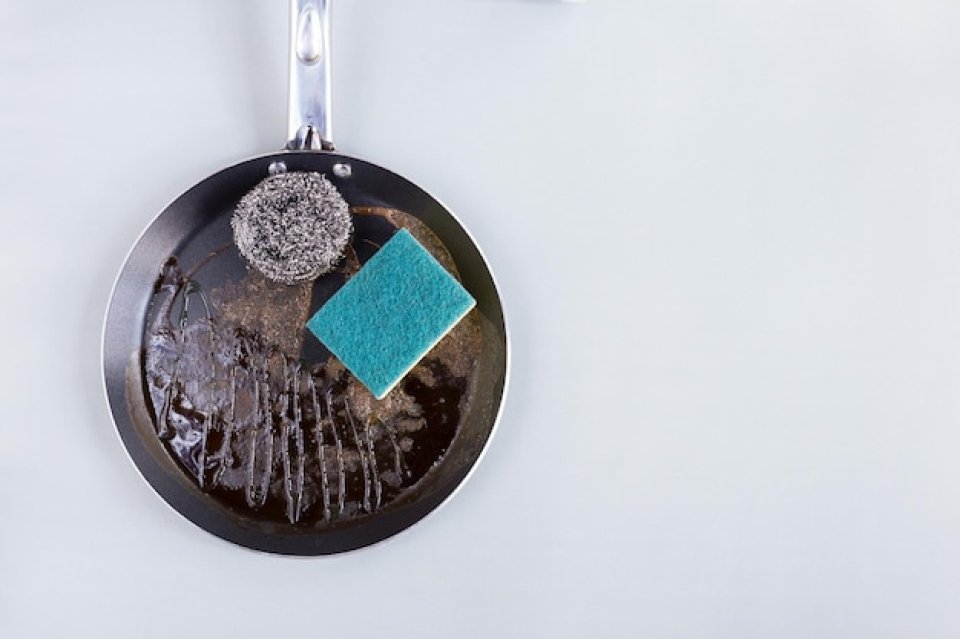
Okay, confession time: I’ve burned plenty of things onto my cast iron. We’re talking carbonized, welded-on disasters. Even the salt scrub sometimes needs backup. Here’s what I do when things get real.
Add water to your pan and bring it to a simmer on the stove for 5-10 minutes. The heat and moisture will loosen even the most stubborn bits. Some people call this deglazing, but I just call it emergency cleanup mode.
After simmering, dump the water and immediately do the salt scrub while the pan is still warm. The combination of thermal shock and abrasive action works wonders. I’ve saved pans I thought were goners with this technique.
Another option? Make a paste with baking soda and water instead of salt. It’s slightly less abrasive but still effective. I reserve this for when I need something gentler or I’m out of coarse salt.
Common Mistakes People Make
Let me save you from the mistakes I made when I started. First up: using fine table salt. Don’t do it. It dissolves too quickly and doesn’t provide enough abrasion. Coarse kosher salt or sea salt is what you need.
Second mistake? Scrubbing with steel wool or metal brushes. Sure, they’ll clean your pan, but they’ll also strip your seasoning faster than you can say “rusty mess.” Stick with the salt method or a soft sponge.
Third—and this one kills me—people let their pans air dry. I’ve seen so many beautiful cast iron pieces ruined by rust because someone thought air drying was sufficient. It’s not. Ever. Heat dry always.
Building Better Seasoning Over Time
Here’s a cool bonus: the salt and oil cleaning method actually improves your seasoning with each use. You’re constantly adding thin layers of polymerized oil. It’s like compound interest for your cookware.
I’ve had the same cast iron skillet for eight years now, and it’s more non-stick than any Teflon pan I’ve owned. The secret? Consistent cleaning with this method and regular cooking. Every time you cook with fat, you’re building that seasoning.
Want to supercharge your seasoning? Cook bacon frequently. I’m not even joking—bacon grease is cast iron gold. The fat coats everything perfectly, and cleaning up bacon residue with the salt method is ridiculously easy.
Alternative Cleaning Methods Worth Knowing
The salt scrub is my go-to, but I’m not dogmatic about it. Sometimes I’ll use just hot water and a stiff brush for light cleaning. If I’ve only cooked something simple like a grilled cheese, why waste salt?
Another legit method? Chainmail scrubbers paired with just water. They work great, but they cost money and take up drawer space. I prefer keeping things simple. Plus, the salt method does double duty by reseasoning.
Some people swear by potato halves as natural scrubbers. Cut a potato, dip it in coarse salt, and scrub away. It works, but honestly, it feels gimmicky to me. Why use a potato when a paper towel does the job better?
The Truth About Cast Iron Maintenance
Let’s talk real for a second. Cast iron maintenance has this mystique around it, like it’s some ancient secret art. People get intimidated and stick to their non-stick pans. But here’s the truth: it’s actually easier than regular pan maintenance.
You’re not dealing with coatings that chip or scratch. You’re not worrying about high heat damaging anything. Cast iron gets better with age and use. That crusty old pan your grandma used? Still cooking perfectly after 50 years. Try that with a Teflon pan.
The salt cleaning method fits perfectly into this low-maintenance philosophy. Quick, effective, and actually beneficial for your pan. I spend less time cleaning my cast iron than I ever did with my old stainless steel cookware.
Why Your Pan Deserves This Treatment
Think about how much you’ve invested in your cast iron—whether it’s money, time, or emotional attachment. A quality piece can last literally forever if you treat it right. The salt method is just respecting your equipment.
I’ve seen people baby their cast iron like it’s made of glass, then turn around and blast it with harsh soap. Makes no sense, right? Or they’ll ignore it completely and let rust take over. Both extremes are wrong.
Your cast iron wants to be used and cleaned properly. It’s a workhorse, not a decoration. Treat it with the salt method, cook with it regularly, and it’ll outlive you. That’s a pretty good return on investment.
Final Thoughts: Keep It Simple
Here’s what it all boils down to: coarse salt, oil, elbow grease. That’s the hack. No fancy products, no complicated routines, no nonsense. Just three ingredients and two minutes of your time after cooking.
I’ve tried everything over the years—specialized cleaners, expensive tools, elaborate seasoning protocols. Nothing beats the simplicity and effectiveness of the salt scrub. It’s one of those rare things that actually lives up to the hype.
So next time you finish cooking on your cast iron, skip the soap. Grab your salt and oil instead. Your pan will develop that legendary patina everyone talks about, and you’ll wonder why you ever complicated things. Trust me on this one—eight years of perfect cast iron doesn’t lie.
FAQs
Q: Can I use the salt method on enameled cast iron?
A: No way! Enameled cast iron has a glass coating that you can actually clean with soap. The salt scrub is only for traditional bare cast iron. Using it on enamel could scratch the coating.
Q: How often should I deep clean my cast iron with the salt method?
A: Use it after every cooking session where food sticks to the pan. For light cooking like grilled cheese, hot water and a brush work fine. I probably do the full salt scrub 3-4 times a week.
Q: What if I accidentally used soap on my cast iron?
A: Don’t panic! Rinse it thoroughly, dry it completely, and apply a fresh layer of oil. Cook something fatty soon. One soap incident won’t destroy years of seasoning, but don’t make it a habit.
Q: Can I use regular table salt instead of kosher salt?
A: Technically yes, but it’s way less effective. Table salt dissolves too quickly and doesn’t provide enough abrasive action. Kosher or coarse sea salt is worth the extra dollar. Trust me on this.
Q: Is it normal for my pan to look dull after cleaning?
A: Absolutely! The salt scrub removes some surface oil, making it look matte. That’s why you reapply a thin layer of oil after drying. After a few cooking sessions, the shine comes back even better than before.