
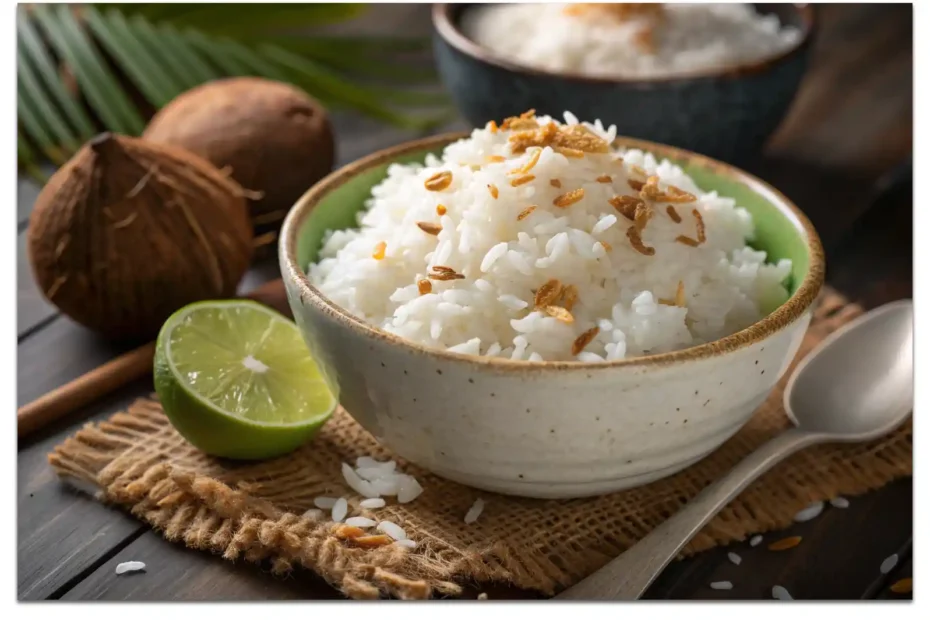
Tired of boring plain rice? This coconut rice recipe transforms ordinary rice into something special that everyone actually fights over at dinner.
I discovered thai coconut rice years ago at a restaurant and became obsessed. After countless attempts, I finally nailed the perfect version that rivals any takeout.
This recipe features fluffy rice cooked in coconut milk with aromatic spices. It’s creamy, slightly sweet, and incredibly fragrant—everything rice should be but usually isn’t.
Prep Time: 5 minutes
Cook Time: 20 minutes
Total Time: 25 minutes
Servings: 4-6 people
Why This Coconut Rice Works
Most coconut rice recipes either turn out mushy or lack real coconut flavor. This one solves both problems with the perfect coconut milk to water ratio.
Using jasmine rice instead of regular long-grain creates that authentic Thai rice recipes texture. It’s naturally aromatic and slightly sticky—perfect for absorbing coconut flavors throughout.
The secret is toasting the rice first before adding liquid. This creates nutty undertones and prevents the grains from becoming gummy or overcooked later on.
IMO, this beats regular rice so much that I rarely make plain white rice anymore. Why would I when this takes the same effort with way better results?
Ingredients You’ll Need
Here’s everything for this how to make coconut rice masterpiece. Simple pantry staples that create restaurant-quality results every single time you make it.
For the Rice:
- 2 cups jasmine rice (or basmati)
- 1 can (13.5 oz) full-fat coconut milk
- 1 1/4 cups water
- 2 tablespoons sugar
- 1 teaspoon salt
- 1 tablespoon butter or coconut oil
- 2-3 pandan leaves (optional, for authentic flavor)
For Garnish:
- 1/4 cup toasted coconut flakes
- Fresh cilantro
- Lime wedges
The full-fat coconut milk is non-negotiable here. Light versions create bland, watery rice that nobody wants to eat or serve to guests at dinner.
Equipment Options
You have multiple ways to make this depending on what’s in your kitchen. All methods work—just pick what’s easiest for you personally.
Stovetop: Traditional method using a pot. Gives you the most control and creates perfect texture when you follow the steps correctly throughout.
Rice Cooker: The easiest coconut rice recipe rice cooker method. Just dump everything in, press start, and walk away. Foolproof results every time.
Instant Pot: Pressure cooking works great. Same ingredients, just 4 minutes on high pressure with natural release. Fast and hands-off completely.
Slow Cooker: Yes, you can make slow cooker coconut rice. Takes 2-3 hours on low but requires zero attention during cooking time.
I’ll cover the stovetop method in detail, then explain adjustments for other cooking methods. Choose whatever works best for your situation today.
How To Make Perfect Coconut Rice (Stovetop)
Alright, let’s get cooking. I’ll walk you through every step with all the details that actually matter for getting this right first try.
Step 1: Rinse Your Rice
Place the rice in a fine-mesh strainer and rinse under cold running water. Swish it around with your hands while the water runs through.
Keep rinsing until the water runs clear instead of cloudy. This removes excess starch that makes rice gummy and clumpy instead of fluffy and separate.
This step takes about 2-3 minutes but makes a massive difference. Skipping it means sticky, mushy rice that clumps together in unappealing ways.
Shake the strainer well to remove excess water after rinsing. You want the rice damp, not dripping wet when you add it to the pot.
Step 2: Toast the Rice
Heat butter or coconut oil in a medium saucepan over medium heat. Once melted and hot, add your rinsed rice to the pan.
Stir constantly for 2-3 minutes until the rice smells nutty and some grains start turning slightly translucent at the edges. Don’t let it brown.
This toasting step is optional but highly recommended. It adds depth and prevents the rice from absorbing too much liquid too quickly during cooking.
You’ll hear the rice crackling slightly as it toasts. That’s perfect—it means you’re developing flavor that plain boiled rice simply can’t match.
Step 3: Add Liquids and Seasonings
Pour in the coconut milk, water, sugar, and salt. Stir everything together until the sugar dissolves completely into the liquid mixture.
If using pandan leaves, tie them in a knot and toss them in now. They add an aromatic, vanilla-like flavor that’s traditional in thai rice recipes.
Bring the mixture to a boil over high heat. This should take about 3-4 minutes. Watch it carefully so it doesn’t boil over messily.
Once boiling, give it one final stir to make sure nothing’s stuck to the bottom. Then you’re ready for the crucial simmering step.
Step 4: Simmer and Steam
Reduce heat to the lowest setting and cover the pot with a tight-fitting lid. Don’t lift that lid for the next 15 minutes—seriously.
The rice needs to steam undisturbed. Opening the lid releases steam and disrupts the cooking process, resulting in unevenly cooked rice with hard centers.
After 15 minutes, turn off the heat but keep the lid on. Let it sit for 5 more minutes to finish steaming completely off the heat.
This resting time allows the rice to absorb any remaining liquid and firm up perfectly. Patience here is what separates good rice from great rice.
Step 5: Fluff and Serve
Remove the lid and use a fork to fluff the rice gently. Break up any clumps and separate the grains without mashing them.
Remove the pandan leaves if you used them. Taste and adjust salt if needed—sometimes you want a tiny pinch more for perfect seasoning.
Transfer to a serving bowl and garnish with toasted coconut flakes. The extra coconut adds textural contrast and reinforces the coconut flavor beautifully throughout.
Serve immediately while hot and fluffy. This rice stays good for a few hours but tastes best fresh from the pot when it’s still steaming.
Rice Cooker Method
Want the easiest how to make coconut rice in rice cooker version? This coconut rice in rice cooker recipe is ridiculously simple and foolproof.
Rinse your rice as normal and add it to the rice cooker. Pour in the coconut milk, water, sugar, and salt directly into the cooker.
Stir briefly just to dissolve the sugar and distribute everything evenly. Add your pandan leaves if using them for that authentic aromatic flavor.
Close the lid and press the regular white rice cooking button. The rice cooker coconut rice does all the work automatically without any monitoring needed.
When it beeps, let it sit on warm for 5 minutes before opening. Fluff with a fork, garnish with toasted coconut, and serve immediately.
This coconut basmati rice in rice cooker method works perfectly with any type of rice cooker—from basic models to fancy Japanese ones.
Variations Worth Trying
Once you’ve mastered this basic how to cook coconut rice technique, these variations let you explore different flavor combinations and serving styles.
Coconut Rice and Chicken: Serve this as a base for grilled or curry chicken. The coconut complements chicken perfectly and soaks up any sauce.
Coconut Fried Rice: Use leftover coconut rice to make fried rice. Add veggies, eggs, and protein—the coconut adds extra dimension to standard fried rice.
Coconut Sticky Rice: Use glutinous rice instead of jasmine for a dessert version. Sweeten it more and serve with mango for authentic Thai dessert.
Hawaiian Rice Recipe Style: Add pineapple chunks and macadamia nuts after cooking. Creates a tropical vibe perfect for luau-themed meals and parties.
You could even use this as a base for coconut curry recipes. The rice and curry sauce together create incredible flavor harmony throughout the dish.
Perfect Pairings
These coconut rice meals work beautifully as a side for so many main dishes. Here are my favorite combinations after making this hundreds of times.
Thai Curries: Obviously perfect together. Green curry, red curry, massaman—all pair incredibly with coconut rice. The flavors complement each other naturally throughout.
Grilled Fish: Especially salmon or mahi-mahi. The rich fish needs something creamy to balance it, and coconut rice delivers exactly that.
Jerk Chicken: Caribbean meets Asian in the best possible way. The sweet coconut cools the spicy jerk seasoning perfectly for balanced bites.
Stir-Fries: Any vegetable or protein stir-fry becomes more interesting over coconut rice instead of plain white rice. Adds complexity without competing.
Satay: Thai or Indonesian satay skewers with peanut sauce. The coconut rice soaks up that peanut sauce beautifully and ties everything together.
Common Mistakes to Avoid
I’ve messed this up enough times to know exactly what goes wrong. Here’s how to avoid the disasters that ruin perfectly good coconut rice.
Using Light Coconut Milk: This creates bland, watery rice without that signature richness. Always use full-fat coconut milk for proper texture and authentic flavor.
Not Rinsing Rice: Excess starch makes the rice gummy and clumpy. Take those 2 minutes to rinse until the water runs clear—it matters enormously.
Lifting the Lid: Peeking releases steam and disrupts cooking. Keep that lid on for the full time or you’ll end up with crunchy, undercooked rice.
Wrong Liquid Ratio: Too much liquid makes mush, too little leaves it dry. Stick to the recipe ratios—they’re tested and work consistently every time.
Skipping the Rest: Not letting it sit after cooking means uneven texture. That 5-minute rest finishes the cooking and allows everything to settle perfectly.
Storage and Reheating
FYI, this rice keeps beautifully for meal prep. Here’s how to store and reheat it without losing that perfect texture we worked hard for.
Storage: Cool completely, then store in an airtight container in the fridge. It keeps for 4-5 days without any issues or significant quality loss.
Reheating: Add a tablespoon of water or coconut milk before microwaving. The moisture prevents it from drying out during reheating completely.
Microwave: Cover and heat in 1-minute intervals, stirring between. Usually takes 2-3 minutes total to heat through evenly without dry spots.
Stovetop: Add to a pan with a splash of liquid, cover, and steam over low heat for 5 minutes. This method produces the best reheated texture.
Freezing: Freeze in portion-sized containers for up to 3 months. Thaw in fridge overnight before reheating using either method mentioned above.
Leftover coconut rice makes incredible fried rice. Just add some veggies, protein, and soy sauce—you’ve got a whole new meal instantly.
Why Coconut Rice Beats Plain Rice
After making this countless times, I rarely go back to plain rice. Here’s why coconut rice should become your default rice preparation method.
More Interesting: Plain rice is boring. This has actual flavor that complements food instead of just being a bland filler on the plate.
Same Effort: Takes exactly the same time and effort as plain rice. If you’re making rice anyway, why not make it taste better?
Versatile: Works with Asian, Caribbean, Latin, or even Mediterranean food. The mild coconut flavor enhances rather than clashes with most cuisines.
Impressive: Guests think you put in way more effort than you actually did. It looks and tastes fancy but requires no special skills at all.
The slight sweetness from coconut cuts through spicy, salty, or rich dishes. It’s the perfect supporting player that elevates everything on the plate.
Making It Vegan
This recipe is naturally vegetarian and easily becomes vegan. Just swap the butter for coconut oil—that’s literally the only change needed here.
Coconut oil actually enhances the coconut flavor even more than butter does. It creates a more cohesive coconut experience throughout every bite.
If you’re serving vegans, make sure any toppings or accompanying dishes are also plant-based. The rice itself is perfectly vegan-friendly already.
This makes a great base for vegan coconut curry recipes. The rice soaks up curry sauce beautifully while staying completely plant-based throughout.
Pro Tips for Restaurant Quality
Want your homemade version to rival Thai restaurants? These expert tips make all the difference between good rice and absolutely exceptional rice.
Quality Coconut Milk: Brands matter. Chaokoh or Aroy-D produce the best results. Cheap brands often have additives that affect flavor and texture.
Jasmine Rice: Thai jasmine rice is ideal. The natural aroma complements coconut perfectly. Basmati works too but creates slightly different results overall.
Toast Coconut Flakes: Don’t skip toasting the garnish coconut. Raw coconut tastes flat—toasted coconut adds nutty depth that elevates the entire dish.
Fresh Pandan: If you can find fresh pandan leaves, use them. Dried or extract versions don’t compare to fresh for that authentic aromatic quality.
Proper Rest Time: Don’t rush the resting period. Those 5 minutes off heat are crucial for perfect texture and even moisture distribution throughout.
Scaling the Recipe
Need more or less coconut rice? Here’s how to scale this recipe while maintaining the perfect texture and flavor balance every single time.
For 2-3 Servings: Use 1 cup rice, half a can coconut milk, 2/3 cup water. Reduce sugar and salt proportionally—everything else stays the same.
For 8-10 Servings: Double everything exactly. You might need a larger pot, but the cooking time remains the same for stovetop or rice cooker.
Rice Cooker Scaling: Most rice cookers have markings. Use the coconut milk rice cooker method and fill to the appropriate line with coconut milk-water mixture.
The ratios stay constant regardless of batch size. One cup rice needs roughly 1.5 cups total liquid for perfect texture every single time.
FAQs
Can I use brown rice instead of white rice?
Yes, but you’ll need more liquid and longer cooking time. Use 2 cups liquid per cup of brown rice and cook for 40-45 minutes instead.
What if I don’t have coconut milk?
You could use coconut cream diluted with water, but honestly, this dish is about coconut. Without it, you just have regular rice with butter.
Can I make this in advance?
Absolutely! Make it up to 2 days ahead and reheat before serving. It actually stays moist better than plain rice when stored properly.
Why is my rice mushy?
Too much liquid or not rinsing the rice properly. Measure carefully and always rinse until water runs clear before cooking every time.
Can I add vegetables to the rice?
You can fold in cooked vegetables after the rice is done. Cooking them with the rice changes the liquid ratio and creates texture problems.
Coconut Rice Recipe: Your New Favorite Side Dish
4-6
servings25
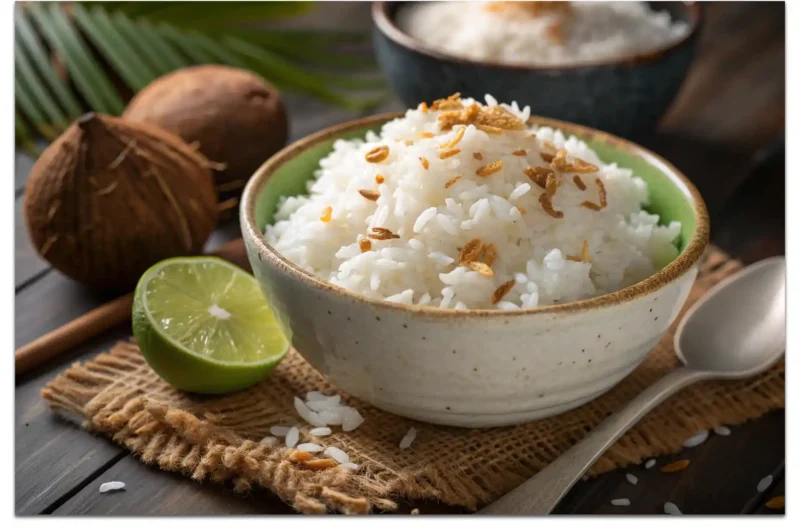
minutesThis coconut rice cooks jasmine rice in coconut milk, water, sugar, and salt for aromatic, creamy results. Takes 25 minutes on stovetop or in rice cooker. Garnished with toasted coconut flakes, it serves 4-6 as the perfect side dish for Asian, Caribbean, or tropical-inspired meals.
Ingredients
- Rice:
-
2 cups jasmine rice (or basmati)
-
1 can (13.5 oz) full-fat coconut milk
-
1 1/4 cups water
-
2 tablespoons sugar
-
1 teaspoon salt
-
1 tablespoon butter or coconut oil
-
2-3 pandan leaves (optional)
- Garnish:
-
1/4 cup toasted coconut flakes
-
Fresh cilantro
-
Lime wedges
How To Make Coconut Rice
- Rinse rice in fine-mesh strainer under cold water
- Continue rinsing until water runs clear (2-3 minutes)
- Shake strainer to remove excess water
- Heat butter or coconut oil in medium saucepan over medium heat
- Add rinsed rice and stir constantly 2-3 minutes until fragrant
- Toast until rice smells nutty (don’t let it brown)
- Pour in coconut milk, water, sugar, and salt
- Stir until sugar dissolves completely
- Add pandan leaves tied in knot if using
- Bring to boil over high heat (3-4 minutes)
- Stir once more to prevent sticking
- Reduce heat to lowest setting
- Cover with tight-fitting lid
- Simmer undisturbed for 15 minutes (don’t lift lid)
- Turn off heat, keep lid on
- Let rest 5 minutes to finish steaming
- Remove lid and fluff with fork
- Remove pandan leaves
- Taste and adjust salt if needed
- Transfer to serving bowl
- Garnish with toasted coconut flakes
- Serve immediately while hot
Final Thoughts on Coconut Rice
So there you have it—everything you need to make incredible coconut rice at home. This recipe has completely changed my rice game forever.
It’s easy enough for weeknights but impressive enough for entertaining guests. The coconut flavor elevates any meal without overwhelming other dishes on the plate.
Once you make this a few times, it becomes automatic. You’ll find yourself making it constantly instead of boring plain rice every time.
Now stop reading and start cooking. Your rice deserves this tropical upgrade, and your taste buds will thank you immediately. Get that rice rinsed!