Skip to content
Home » Recipes » How To Cut Onions Without Crying: Hacks That Actually Work

How To Cut Onions Without Crying: Hacks That Actually Work

  • 9 min read
  • NatashaAdam 
Cut Onions Without Crying

Look, I get it. You’re standing there in your kitchen, knife in hand, ready to make dinner. Then you start cutting an onion and boom—waterworks. Your eyes are burning, tears streaming down your face, and you’re questioning all your life choices.

Been there, done that, got the teary-eyed selfie. But here’s the thing: cutting onions doesn’t have to turn you into a sobbing mess every single time. I’ve tested pretty much every hack out there, and I’m here to share what actually works.

Why Do Onions Make Us Cry Anyway?

Before we jump into solutions, let’s talk science for a sec. When you slice an onion, you break its cells. This releases enzymes that mix with sulfur compounds, creating a gas called syn-propanethial-S-oxide. Fancy name, right?

This gas floats up to your eyes and irritates them. Your eyes respond by producing tears to flush out the irritant. It’s actually your body trying to protect you. Thanks, body, but we need a better plan here.

Understanding this process helps us figure out which hacks actually make sense. Some methods stop the gas from forming. Others keep it away from your eyes. Let’s break down what works.

The Cold Storage Method

Here’s my favorite hack because it’s stupidly simple. Pop your onions in the fridge for 30 minutes before cutting. I usually keep mine there all the time now, FYI.

Cold temperatures slow down the enzyme activity. Less active enzymes mean less of that irritating gas gets released. It’s basic chemistry working in your favor for once.

Does it eliminate tears completely? Nope. But it seriously reduces them to the point where you can actually cook without looking like you just watched a sad movie. IMO, this is the easiest method that requires zero extra effort.

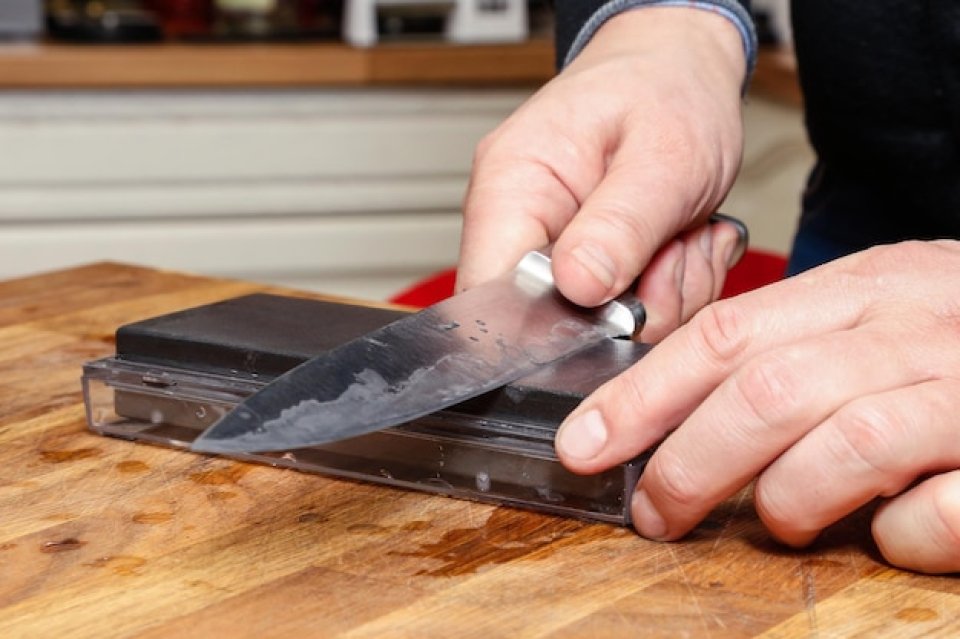
Sharpen That Knife

Sharpen The Knife

I cannot stress this enough: a sharp knife changes everything. When I finally got my knives professionally sharpened, the difference was night and day.

A dull knife crushes the onion cells, releasing more of those tear-inducing enzymes. A sharp knife makes clean cuts through the cells, keeping them more intact and releasing less gas.

Think about it like this: would you rather tear paper or cut it cleanly? Same principle applies here. Clean cuts equal fewer tears. Plus, sharp knives are safer because they require less pressure and slip less often.

Also Visit:  10 Genius Ways To Peel Garlic Without Smelling Like Garlic

Invest in a good knife sharpener or get your knives professionally sharpened every few months. Your eyes will thank you, and your cooking will improve overall.

The Water Technique

Running water is your friend when dealing with onions. I’ve tried a few variations of this method, and they all help to some degree.

Some people cut their onions under running water. It works, but honestly, it’s awkward and wasteful. I prefer rinsing the onion and my knife frequently while cutting instead.

The water traps the gas before it reaches your eyes. You can also try cutting near a pot of boiling water. The steam pulls the gases away from your face toward the water.

Another variation: fill a bowl with cold water and keep it next to your cutting board. Dip your knife in it between cuts. This keeps the blade cool and wet, which helps minimize gas release.

The Ventilation Approach

Turn on your kitchen exhaust fan before you start cutting. Seriously, why don’t more people do this?

The fan pulls air away from your face, taking those irritating gases with it. If you don’t have an exhaust fan, open a window and position a regular fan to blow across your cutting area.

I sometimes cut onions right next to my stove with the exhaust on high. It’s not foolproof, but combined with other methods, it makes a noticeable difference.

Good airflow is underrated. It’s one of those things you don’t think about until you realize how much it helps. Fresh air circulation keeps the gas concentration lower around your face.

The Candle Trick

This one sounds weird, but hear me out. Light a candle and place it near your cutting board. The flame supposedly draws in and burns the sulfur compounds before they reach your eyes.

I’ve tried this method multiple times with mixed results. Sometimes it seems to help, sometimes not so much. Scientists aren’t entirely convinced it works either, but some home cooks swear by it.

If you’re already using candles in your kitchen for ambiance, why not position one near your prep area? At worst, it doesn’t help. At best, you get fewer tears and nice lighting 🙂

The Breathing Technique

Here’s a free hack that costs nothing: breathe through your mouth while cutting onions. Keep your mouth slightly open and breathe in and out through it instead of your nose.

This reduces the amount of gas that reaches your eyes through your nasal passages. It sounds too simple to work, but it genuinely helps reduce irritation.

Also Visit:  Cabbage Soup For Weight Loss Recipe: Does It Actually Work?

You might look a bit silly standing there with your mouth hanging open. But who cares? Nobody’s judging you when you’re meal prepping. Plus, no tears means no explaining to your roommate why you’re crying over dinner.

The Bread Method

Stick a piece of bread in your mouth while cutting onions. Let it hang out partially, like you’re some kind of onion-cutting pirate with a bread parrot.

The bread supposedly absorbs the sulfur compounds before they irritate your eyes. Does it work? Sort of. I’ve had decent success with this method, though I feel ridiculous doing it.

The science behind it is questionable, but lots of people report success. Maybe it’s just forcing you to breathe through your mouth. Either way, if it works for you, who cares why?

The Freezer Flash Method

If you need onions cut RIGHT NOW and forgot to refrigerate them, stick them in the freezer for 10-15 minutes. Not longer though, or they’ll start to freeze solid.

This quick chill slows down the enzymes temporarily. It’s not as effective as refrigerating for 30 minutes, but it’s better than nothing when you’re in a rush.

I use this method when I’m making dinner and realize I forgot to prep my onions ahead of time. It buys me enough tear-free time to get through the chopping without a complete meltdown.

The Vinegar Rinse

Cut your onion in half and rinse the cut sides under cold water. Then wipe them down with a paper towel dampened with white vinegar before you start dicing.

The vinegar neutralizes some of the enzymes on the surface. This method works best combined with keeping your onions cold. On its own, it helps but doesn’t eliminate tears completely.

Fair warning: your onions will taste slightly different if you use too much vinegar. Use just enough to dampen the surface lightly. We want tear-free cooking, not pickled onions, right?

The Proper Cutting Technique

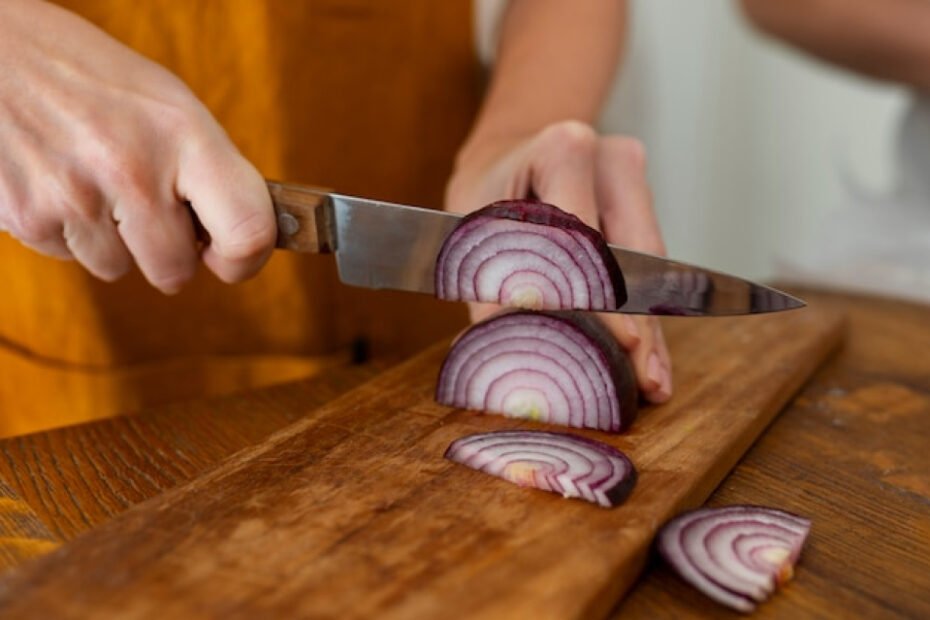
How you cut matters almost as much as what tricks you use. Always cut the root end last because that’s where the highest concentration of sulfur compounds hangs out.

Start by cutting the onion in half from top to bottom. Peel off the papery outer layers. Leave the root end intact for as long as possible while you dice the rest.

Make horizontal cuts first, then vertical cuts, keeping the root end together. Finally, slice across to create dice. This technique minimizes cell damage and keeps tears to a minimum throughout most of the process.

What Doesn’t Work

Let me save you some time by telling you what I’ve tried that failed spectacularly. Wearing swimming goggles makes you look ridiculous and fogs up immediately. Chewing gum doesn’t help at all.

Also Visit:  How To Keep Nonstick Pans Brand New With This Easy Trick

Holding a match between your teeth is dangerous and ineffective. And no, rubbing lemon juice on your cutting board beforehand doesn’t do anything except make your board smell citrusy.

I’ve seen people recommend wearing contact lenses because they create a barrier. As someone who wears contacts, I can confirm they don’t help one bit. The gas still irritates your eyes regardless.

My Personal Go-To Combination

After testing everything, here’s what I actually do every time I cut onions. I keep my onions in the fridge constantly. Before cutting, I sharpen my knife or at least make sure it’s sharp.

I turn on my exhaust fan, rinse the onion in cold water, and cut it properly with the root end last. This combination reduces tears by about 90% for me.

Some days I still get a little teary-eyed, but it’s manageable. I’m not standing there sobbing into my cutting board anymore, and that’s a win in my book.

The Bottom Line

Cutting onions without crying isn’t about finding one magic trick. It’s about combining multiple methods that work together to minimize gas release and exposure.

Start with cold onions and a sharp knife—those two alone make the biggest difference. Add ventilation and proper technique, and you’re golden. Everything else is just bonus protection.

Will you ever be 100% tear-free? Probably not. But you can definitely reduce the crying to barely noticeable levels. And honestly, that’s all we really need to make cooking with onions way less miserable.

Now get out there and chop some onions without looking like you’re having an emotional breakdown. Your dinner awaits, and your eyes can finally stay dry!

FAQs

Q: Does putting onions in the freezer work better than the fridge? A: Freezing for 10-15 minutes works in a pinch, but refrigerating for 30 minutes is better. Frozen onions can get mushy and are harder to cut cleanly.

Q: Will wearing contacts while cutting onions help prevent tears? A: Nope, contacts don’t create enough of a barrier to stop the gas. The irritation happens on your eye surface regardless of whether you wear contacts or not.

Q: Why do some onions make me cry more than others? A: Different onion varieties contain varying levels of sulfur compounds. Sweet onions typically cause fewer tears than regular yellow or white onions. Freshness matters too—older onions tend to be more irritating.

Q: Can I prep onions ahead of time to avoid crying later? A: Absolutely! Chop your onions and store them in an airtight container in the fridge. They’ll keep for 3-4 days. You deal with tears once instead of every time you cook.

Q: Does the bread-in-mouth trick actually work scientifically? A: The science is unclear, but many people report success. It might work by absorbing gases or simply by making you breathe through your mouth. If it works for you, use it!

Leave a Reply

Your email address will not be published. Required fields are marked *